
Police Modernization in Mexico: Why Automated Shooting Ranges Are a Necessity
January 7, 2026The Reality of Public Security in Mexico
In today's public security landscape in Mexico, ongoing police training is not just an administrative requirement of the Executive Secretariat of the National Public Security System; it is a matter of survival and effectiveness. Municipal police, often the first responders to high-risk situations, face a critical challenge: the gap between theoretical training and operational reality on the streets.
Historically, many agencies have relied on makeshift lots or outdated facilities for their shooting practice. However, the professionalization that modern Mexico demands requires a paradigm shift. Professionally designed Live-Fire Shooting Ranges (Indoor Shooting Ranges) have become the backbone of a competent, safe police force that is lethally accurate when the situation calls for it.
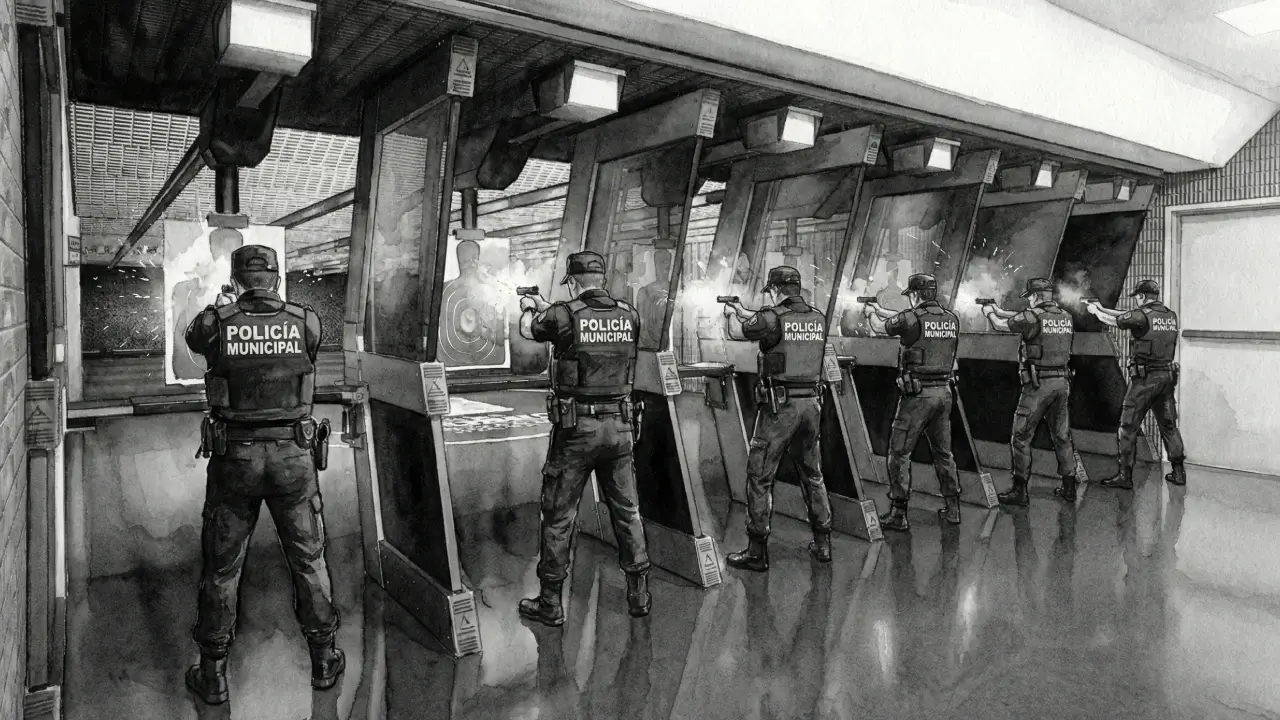
The Shooting Lane: More Than a Simple Divider
The fundamental component of any modern shooting range is the shooting booth or lane (shooting stall). In the past, simple wooden dividers or concrete walls were used, which over time produced dust and dangerous debris.
A professional shooting lane must serve three vital functions for the officer in training:
- Tactical Isolation: Officers must be able to focus on their technique (grip, breathing, sight alignment) without visual or physical distractions from the shooter next to them.
- Lateral Ballistic Protection: In a training environment, especially with cadets or new recruits, the risk of accidental discharges at oblique angles is real. Lane panels must be built with certified armored materials that ensure a bullet cannot cross from one lane to another, protecting fellow officers.
- Ergonomics and Gear Management: Modern booths include folding tables or surfaces designed so officers can manage their magazines, backup weapon and tactical gear, simulating the resource management they would do in a patrol car or behind cover.
Automation: Training for Uncertainty
One of the most serious mistakes in traditional training in Mexico is static practice: shooting at a fixed paper target at a known distance, with no time limit and no stress. Crime is not static; it is dynamic, fast and unpredictable.
This is where target automation plays a crucial role. A shooting range equipped with programmable, automated target-return systems allows:
- Variable Distance Simulation: The instructor can program the target to stop at 3, 7, 15 or 25 meters, forcing officers to adjust their aim instantly.
- “Friend/Foe” Systems (Turning Targets): Systems that turn the target (showing a threat or an innocent civilian) for fractions of a second are vital for training judgment and decision-making under stress. This builds muscle memory and discernment, reducing the risk of collateral damage in real operations.
- Dynamic Training: The most advanced systems let the target move sideways or charge toward the shooter, simulating a knife attack or a rush, preparing officers to react to imminent aggression.
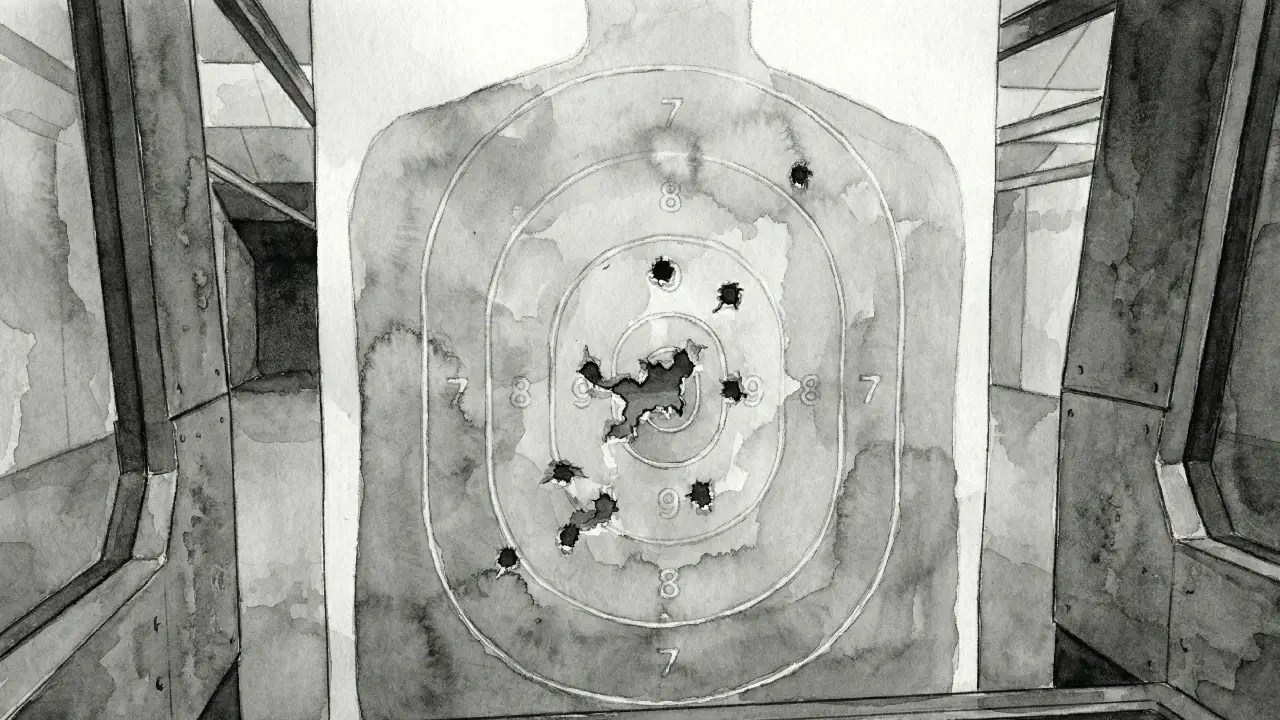
Ballistic Engineering and Materials: Safety First
The difference between a makeshift shooting range and a professional one lies in materials science. Those of us who work in security infrastructure know that a bullet doesn't disappear on impact; it fragments, ricochets or pulverizes.
Using certified ballistic materials is non-negotiable for the following reasons:
Bullet Traps and Energy Absorption
Mounds of sand are no longer enough. Modern ranges use ballistic steel (such as AR500 or AR550) at specific angles to deflect projectiles into deceleration chambers, or granulated rubber traps that capture the bullet intact. This prevents dangerous ricochets that can injure the shooter or the instructor.
Occupational Health: The Lead Problem
An aspect often overlooked in municipal tenders is long-term health. Bullet impacts generate lead dust and toxic gases. A well-designed range uses materials that minimize fragmentation and is complemented by laminar-flow ventilation systems. This ensures that instructors, who spend hours inside the facility, do not suffer heavy-metal poisoning.
Durability and Maintenance
For a municipality, the investment must last. Using standard commercial materials leads to accelerated wear. Ballistic coatings, anti-spark floors and acoustically treated walls ensure the facility operates for years with preventive rather than corrective maintenance.